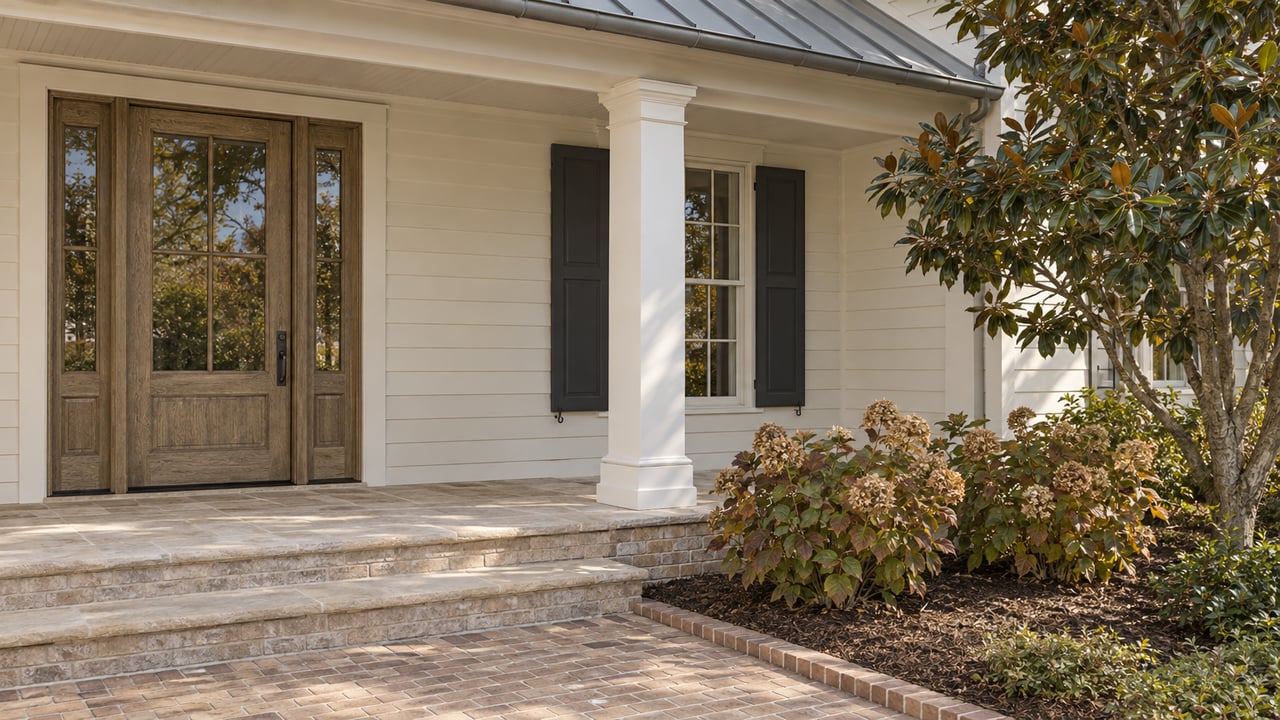
On St. Simons Island, the Rental Certificate Doesn't Come With the House
October 15, 2026
October 15, 2026
A St. Simons Island home that rents by the week usually goes to market with its rental history, booking calendar and furnishings. The Glynn County certificate that makes those rentals legal stays behind. Chapter 2-31 of the county code says an Accommodation Excise Certificate "is not assignable or transferable." After a sale, the new owner can keep operating for a 30-day grace period, but only if a new application is submitted within seven days of the sale.
That rule shapes every decision below. Occupancy, covenants, the guest cottage out back and even a past revocation all depend on who holds title and what that person files. The listing description has no bearing on any of it.
The short-term rental ordinance sets out the sequence for a property that is already renting when it changes hands:
The same seven-day window applies when the managing agency changes. A buyer who closes and then switches property managers can trigger the requirement twice.
The application asks for more than a name. It asks for the parcel identification number, the number of dwelling units and bedrooms, a 24/7 local point of contact, the number of on-site parking spaces, and whether a managing agency is involved, with that agency's occupation tax number. Most of that can be gathered before closing. Seven days goes quickly when you are also moving in furniture and changing utilities.
Since late 2025, applications run through a new system. Glynn County's Licensing and Compliance Department announced on October 21, 2025 that all 2026 renewals would go through OpenGov starting November 1, 2025. It also said previous certificate data would not be migrated into the new system.
The initial certificate fee depends on when the application is filed:
| Application filed | Fee | Coverage |
|---|---|---|
| Before July 1 | $150 | Current calendar year |
| July 1 through November 30 | $75 | Current calendar year |
| December 1 or later | $175 | Rest of this year plus all of the next, with no renewal fee for the next year |
A buyer who closes this fall and files in October or November pays $75 for a certificate that runs through year-end. A buyer who files on or after December 1 pays $175, and that certificate covers 2027 as well.
Listings often promote a sleeping count. The county uses its own formula, and it is the one that applies after closing. Under the ordinance, maximum occupancy is two people per bedroom plus two. Children under 12 don't count toward that number. Total occupancy, children included, can't exceed 15 unless the county grants a variance, and a variance allowing a proportional increase is available only for dwellings with six or more bedrooms.
| Bedrooms | Formula result | Ceiling, including children |
|---|---|---|
| 3 | 8 | 15 |
| 4 | 10 | 15 |
| 5 | 12 | 15 |
| 6 | 14 | 15, unless a variance is granted |
| 7 | 16 | 15, unless a variance is granted |
The ordinance defines a bedroom as a room "furnished with one or more beds" and "customarily used and intended primarily for sleeping." The application asks for the bedroom count in each unit and an acknowledgment that only one party of guests is allowed per dwelling unit.
Large-group stays are a big part of the island's rental demand. Commissioner Cap Fendig, whose district covers all of St. Simons, told The Brunswick News that visitors on his boat and trolley tours "are all looking for large houses to accommodate eight or more people." For a buyer, the house's value as a group rental depends on the bedroom count the new owner can document. The number in the listing headline doesn't change that.
Every stay also carries a tax. Glynn County's accommodation excise tax rose from 5% to 7% on July 1, 2025, after Gov. Kemp signed House Bill 732, The Current reported. The county's short-term rental page lists it as a monthly 7% payment.
The county certificate is only one layer of permission. The application includes this affirmation:
"Affirm that the operation of a Short-Term Rental on the Property is not in violation of any other land use restrictions, including covenants, deed restrictions, homeowner association rules and regulations, or other such restrictions."
The applicant makes that statement personally. A seller's years of renting don't make it for the buyer. The county can suspend or revoke a certificate if it learns an application contained a "fraudulent or material misrepresentation, omission, or false or untruthful statement."
In the same Brunswick News article, Fendig said most island neighborhoods have at least one short-term rental. The exception, he said, is "developments where a homeowners association has prohibited them." So for many St. Simons properties, the deciding rule sits in the community's governing documents, and those documents are part of what a buyer reviews during due diligence.
On April 16, 2026, the Glynn County Board of Commissioners unanimously adopted a rewritten zoning ordinance, effective July 1, 2026. One of its sections matters a great deal to buyers looking at homes with a detached guest unit.
Section 4.8.4 of the posted ordinance allows one accessory dwelling per lot. The owner can use the main house, the accessory dwelling or both as long-term rentals, defined as rentals of more than 30 days at a time. An accessory dwelling that "has a short-term rental certificate issued prior to the effective date of this ordinance" is exempt from that limit. On St. Simons Island, a new accessory dwelling requires a lot of at least one acre. An accessory dwelling also can't be sold as a separate dwelling.
Under this ordinance, a detached cottage that already held a certificate before July 1, 2026 keeps its exemption. The open question is what happens at a sale. The exemption depends on a certificate issued before July 1, 2026, and Chapter 2-31 says certificates can't transfer, so a buyer would apply for a new one after that date. The zoning text doesn't say whether the exemption carries over, and no county explanation found in our research addresses it. Glynn County Planning and Zoning can answer that before a buyer counts on cottage income.
The rules may also keep changing. The ordinance posted on the county site is marked amended September 17, 2026. When the rewrite was adopted, Commission Chairman Wayne Neal called the new rules living documents, The Brunswick News reported, and said: "This is a long document. There will be changes made to it." The same report listed short-term rental parking among the zoning amendments approved at adoption.
The rule also works in the buyer's favor in one situation. If a certificate is revoked, the county won't issue a new one for that property, owner or certificate holder for 12 months. A new certificate can still be issued if the property is sold to a new owner in an arm's-length transaction.
Grounds for revocation include three or more ordinance or noise violations that led to convictions within 12 months, and a local contact who fails to respond to complaints on three or more occasions in the same period. A property's past record doesn't automatically keep a new owner out of the rental market. It does show what kind of operation the neighbors are used to.
This is general information about how Glynn County's rules work. It isn't legal, tax or financial advice, so please confirm your own situation with a real estate attorney, tax professional or the county directly.
If you're weighing a St. Simons home with rental history, or you're preparing to sell one, Jenna Green can help you build these questions into your contract timeline so the certificate, the covenants and the closing date line up. Schedule a consultation and we'll go through the property together.
Stay up to date on the latest real estate trends.


Combining creativity, strategy, and a hands-on approach, Jenna Green is dedicated to creating a real estate experience that feels smooth, authentic, and centered around your success.

Jenna Green | Weichert REALTORS®
[email protected]
M: 850-687-6865
O: (912) 373-7653
9AM - 8PM | MON - SAT
9AM - 7PM | SUN
Richmond Hill, GA 31324